

Here are all of the deals for the CVS Ad starting 9/15. There are a couple of fun deals this week! You can get FREE gum, FREE mouthwash, and a great deal on Nivea products.
For those of you who are having trouble with the new online Ad, you can see the weekly ad here.
Don’t forget to sign-up for Double Quaterly Rewards!
If you are just starting out with CVS make sure to check out the CVS Guide. Also head to CVS.com and register your card to get more store coupons.
If you know of additional deals please leave them in a comment below.
Extra Care Deals
-
 $5.79 ECB WYB Bach Rescue Stress Relief Gum , 17 ct., $5.79, limit 1
(makes it FREE) - $3 ECB WYB (2) Colgate Total, Total Advanced 4-4.2 oz, Total Rinse 250 ml, 360 Floss Tip Toothbrush, $2.99, limit 2
 -$1 off Colgate Total mouthwash (CVS manufacturer coupon) printable
-.75/1 Colgate Total mouthwash, 8 oz+ printable
-$1 off Colgate 360 manual toothbrush, excl Plus, Triple Action, Extra Clean or Classic, SS 7/28 (EXP 09/16)
-$1.10 off Colgate Total or Optic White mouthwash, 8 oz+ printable
-.75/1 Colgate Total toothpaste, 4 oz+ printable
-$1.50/2 Colgate 360 manual toothbrushes printable
-$1 off Colgate mouthwash, 8 oz+ printable
-$1.50/2 Colgate Total, Max Fresh, Optic White or Sensitive toothpaste printable
-$1 off Colgate 360 manual toothbrush, excl Plus, Triple Action, Extra Clean and Classic, SS 9/08
-$1 off Colgate Total, Optic White, Max Fres or Sensitive toothpaste, 4 oz +, SS 9/08
-$2 off Colgate mouthwash, 8 oz +, SS 9/08
(buy (2), use (2) $2 off, makes both FREE) - $5 ECB WYB $15 Simple Facial Care, $2 off, limit 1
(excludes trial/travel and clearance)
Simple Cleansing Wipes, 30 ct., $6.79
Simple Soothing Facial Scrub, 5.6 oz, $8.29
Simple Moisturizer, 4.2 oz, $13.29
-$2 off Simple cleanser, including wipes, play game printable (limit reached)
 -$2 off Facial Moisturizer, Cleanser or Acne Care purchase, $10 +, printing at CVS Coupon Center
(buy (2) Wipes and (1) Scrub, use $2 off store and (3) $2 off, makes it 95¢ ea.) - $1 ECB WYB (2) Kellogg’s Special K Cereal 11.2-19.5 oz or Bars 5-10 ct., $2.50, limit 1
-$1.50 off Kellogg’s product, 1,000 points printable
-.50/1 Kellogg’s Special K Red Berries cereal, 11.2 oz+ printable
-$1 off product WYB (2) Kellogg’s Special K cereal bars, 6 ct.+, on product
-.50/1 Kellogg’s Special K Nourish bars, 5 ct.+ printable
-$1/3 Kellogg’s Special K cereal, 11 oz+ printable
-$1/2 Kellogg’s Special K cereals, (zip 60050) printable
-$1/3 Kellogg’s Special K cereal, 11 oz +, RP 9/15
-$1 off Kellogg’s cereals printable
(buy (2), use (2) $1 off, makes it $1 ea.) Read More→
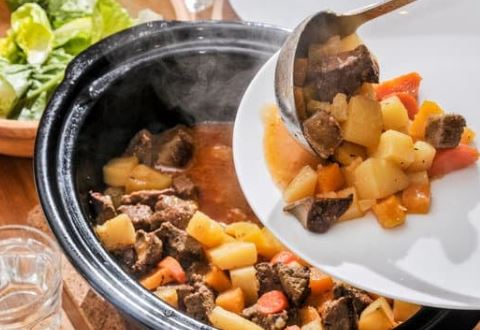
As I mentioned last week, this time of the year can get pretty busy with school starting up, new activities beginning, and more! Crock pot meals are nice because they are not only easy, but can produce delicious and healthy results with the push a button.
You can also freeze the leftovers or prepare many of the ingredients in advance.
Crock Pots make large helpings, and a great way to make it more affordable is to pick Crock Pot recipes based on what’s on sale! Many crock pot recipes call for canned foods, but if you can find the fresh veggies in season and on sale, you can often use the fresh version for about the same price as the canned or frozen, depending on the vegetable.
*These prices are based off of averages and are subject to change weekly
Slow Cooker Kielbasa and White Bean Stew w/Tomatoes & Spinach, recipe
Kielbasa- $2.49-$5 (Bi-Lo, Safeway)
Tomatoes-99¢-$1.99 (Kroger, Food City, Aldi, Publix, Food Lion, Bi-Lo, Ingles, Winn Dixie)
Spinach– 79¢-$4.99 (Target, Food City, Aldi, Lowe’s Foods, Publix)
Parmesan Cheese– 5-8 oz $2-$3.99 (Harris Teeter, Food City)
Chicken Broth– $2 (Lowe’s Foods)
Crock Pot Pork & Apples, recipe
Pork Chops- $1.99-$3.99 lb (Kroger, Harris Teeter, Sweetbay, Bi-Lo, Winn Dixie, Safeway)
Apples– 99¢-$2.49 lb (Ingles, Kroger, Harveys, Lowe’s, Publix, Sweetbay, Bi-Lo, Winn Dixie, Safeway, Earth Fare, Commissary)
Onion-99¢-$3.99 (Kroger, Food City, Lowe’s, Sweetbay, Safeway)
Spicy Mustard– Free- 98¢ (Harris Teeter, Kroger)
Cajun Shrimp & Rice, recipe
Shrimp– (Harris Teeter, Ingles, Kroger, Lowe’s, Food Lion, Safeway, Whole Foods)
Tomatoes-99¢-$1.99 (Kroger, Food City, Aldi, Publix, Food Lion, Bi-Lo, Ingles, Winn Dixie
Green Bell Pepper– 59¢-$2.49 (Food City, Lowe’s, Bi-Lo, Safeway)
Long Grain Rice– 94¢-$1.99(Harris Teeter, Publix)
Garlic- (Pantry)
Onion-99¢-$3.99 (Kroger, Food City, Lowe’s, Sweetbay, Safeway)
Slow Cooked Curry Chicken w/Cauliflower, recipe
Chicken Broth– $2 (Lowe’s Foods)
Chicken Thighs- 99¢-$1.09 lb. (Kroger, Lowe’s, Sweetbay, Bi-Lo, Winn Dixie)
Plain Yogurt– $1.79 (Earth Fare)
Cilantro 50¢ (Safeway)
Cauliflower– $1.89 (Bi-Lo, Winn Dixie)
Slow Cooker Classic Beef Stew, recipe
Roast- $1.49-$3.48 lb. (Ingles, Kroger, Food City, Harveys, Food Lion, Sweetbay, Winn Dixie, Safeway)
Potatoes– $1,39-$3.39 (Ingles, Kroger, Food City, Harveys, Publix, Food Lion, Harris Teeter, Bi-Lo, Winn Dixie, Safeway)
Carrots-49¢-$4.99 (Aldi, Lowe’s, Food Lion, Winn Dixie, Bi-Lo)
Beef Broth– 25% off-$2 (Commissary, Publix)
See more Menu Plans.
 The following is part of an Organic Living Journey Guest Post Series now written by Mariana who has a mother’s heart and scientist’s brain.
Last week, we talked about smoothies. Did you have some fun mixing up your own blends? Smoothies are a filling drink packed with fiber and nutrients. Today, we’re looking at another great health-boosting option: juicing! Unlike smoothies, juices skip the fluff and the bulky fiber, streamlining nutrients straight to your body. I’m going to take a look at what juicing is, why it may be good or bad for you, how to do it, and how to (hopefully) keep it in your budget.
The Basics: What is Juicing? To juice, you use a juicer and extract all the water and nutrients from a fruit or vegetable, removing all the indigestible fiber. Note…juicers remove the indigestible fiber. Even though you’re removing the indigestible (insoluble) fiber, your juice is still keeping the soluble fiber. This is good, because soluble fiber is the kind of fiber that helps clean your blood vessels and remove excess cholesterol.
What are the advantages of juicing?
-Some people have sensitive digestive systems due to disease, inflammation, or damage. By removing the insoluble fiber, the nutrients are very easy to absorb and still gentle on the digestive tract.
-By reducing the bulk (fiber) from fruits and veggies, you will be concentrating the nutrients. It would take pitchers of smoothies to equal the nutrients in one cup of fresh juice.
-Fresh juice delivers a deluge of nutrients and antioxidants directly to your cells where it can be quickly put to use healing and nourishing your body.
-Juicing can help retrain your taste buds from the overly sweet sensation of sugar to more natural flavors and sweetness.
-Would you normally sit down and eat a big plate of swiss chard, raw ginger, apples, cucumbers, dandelion leaves, and celery in one sitting? Not me. Juicing lets you drink a variety of fruits and veggies that you may not normally consider eating.
What are the disadvantages of juicing?
-Watch the sugars. If you are juicing more fruits and root vegetables than veggies, it can spike your blood sugar which can leave you tired, irritable, or anxious. People with diabetes or insulin resistance issues need to be very, very careful what they are juicing.
-Cost. Depending on how often you plan to juice, you are going to need pounds and pounds of fresh produce. The good news is that not all produce is crazy expensive. For example, you can buy a huge bag of prewashed organic Kale for less than $5. Organic apples are about $1.50 per pound. Jumbo 25-lb bags of organic carrots for juicing are $15. Check with your produce department about bulk discounts.
-Storage. Freshly made juices should be consumed fairly quickly. Since the juice is completely raw, any bacteria that was on/in your fruit is also in your juice. No biggie, but if allowed to grow and multiply over the course of days or if left at room temp, the bacteria can make you sick. Quickly store fresh juice in the fridge and consume within 1-2 days.
Why Juice? Have you heard of Joe Cross? When he started his juicing adventure, Joe Cross was 100 lbs overweight, on multiple prescription medications, and was suffering with a painful autoimmune disease. He decided to make a pretty radical change with the hope of regaining some health. Joe went on a 60-day juicing cleanse (no solid food, just juice) and documented the whole experience. You can watch his story in “Fat, Sick, and Nearly Dead” (watch it for free on Hulu and YouTube). After 60 days, Joe had lost a ton of weight (figuratively speaking), was off his medications, and his disease was in remission. That’s an example of what juicing can do. In Joe’s case, it gave his body the supplies and time it needed to fix itself…exactly what the immune system is designed to do. It’s an awesome story!
Joe’s case is on the extreme end of the spectrum and is probably not right for you. On the normal end of the spectrum, juicing is great for one main thing: getting more fruits and vegetables in your diet than you would normally eat. These fruits and veggies carry phytonutrients (plant chemicals). Phytonutrients like flavonoids and anthocyanins are especially gifted at protecting your cells from oxidative stress. Oxidative stress is what we want to avoid. It can lead to atherosclerosis (hardening of the arteries), Parkinson’s disease, Alzheimer’s disease, and chronic fatigue syndrome…to name a few. Oxidative stress also affects the rate of aging. If you’re not getting enough phytonutrients on your own, juicing may be the answer. Is juicing healthier than eating a fruit or veggie. No, but it will help you consume more of them.
How to Juice?
Like with all foods, there are two main ways to get your juice: you either buy it or make it yourself.
Option #1, Buy It: I took a quick look at three companies online who sell fresh juice cleanses. For $69-75 per day (shipping included), you get six (16-oz) bottles of pre-made, organic, raw juice. You’re supposed to drink these juices in order, over the course of one day. This is equivalent to about 20 pounds of produce per day. Now. I’m not going to recommend that you spend $75 for one day of juices, however this may be a good option for some people. If you do not own a juicer, do not have access to organic produce, have the money to invest, and have no time to prepare juices…this may be the solution you’re looking for. That said, you can buy a juicer for the cost of one day of a cleanse. As with all foods, making it yourself will always be cheaper than buying it pre-made, and you’re paying for convenience.
Option #2, Make It:
-
You need a juicer. If you don’t have one and are interested in shopping around for one, check out the quick juicer summary below. If you have one, you’re good to go!
-
Get your produce. You can juice almost anything! Fruits and veggies with some firmness usually work best. Bananas and avocados will not juice. Save those for smoothies or eating. Organic is always a great choice, but if you can’t do everything organic, stick with the Clean 15/Dirty Dozen list to prioritize your spending.
-
Wash your produce. You don’t have to peel anything.
-
Juice it! Some juicers require a little pre-cutting, some will accept a whole fruit or vegetable. All juicers will work around seeds and small stems. Even pineapple skin can go through a juicer. Exceptions: Citrus peels. Although a juicer can handle it, the concentrated oils in the peel may be too overwhelming. Stone fruits. The tough pits in peaches and cherries may damage your machine.
-
Drink!
Green Juice Recipes
Here are a few basic green juice recipes you can try out. If you don’t have one of the ingredients, substitute something similar. Always tweak to your taste preferences. I find that adding a bit of pineapple or cucumber will help soften the flavor a bit if it’s too bitter. Do you have any juice recipes to share? Flavor tips? Comment below!
Super Green Cucumber Juice- this one is very kid-friendly
2 cucumbers
4-6 handfuls of spinach (or collards, swiss chard)
1 granny smith apple
2 sprigs of fresh mint
Zesty Celery Apple
½ cucumber
2 granny smith apples
2 stalks of celery
4-6 handfuls of dark leafy greens (kale, spinach, collards, chard, etc.)
½” – 1” cut of raw ginger
½ lemon or lime, peeled
2-3 dandelion leaves
1-2 leaves of mustard greens (completely optional, very spicy!)
Pineapple Apple Express
2-3” of pineapple (cut off the bottom and top of pineapple first)
2 granny smith apples
4-6 handfuls of greens
1 cucumber
½ broccoli stalk
3 sprigs of mint
small handful of cilantro or parsley
Pretty in Hot Pink (not a green juice)
½ – 1 red beet (raw, not pickled)
1 granny smith apple
½” – 1” raw ginger
1 pear
pinch of cayenne pepper (stir into finished juice)
Buying a Juicer
If you don’t already own a juicer and really want to try juicing, you can start with very little investment. As you begin researching juicers, you’ll see prices ranging from $40 – $400. There are two types of juicers available: centrifugal or masticating.
Centrifugal Juicers: Cut and spin! Centrifugal juicers use blades to grate produce into tiny pieces which are then spun around at high speeds to extract the juice. The pulp is either ejected into a separate container or kept in the centrifuge. This type of juicer is more affordable, yay! However, it’s not great at juicing greens. You can run greens through these juicers, but you won’t get the full amount of juice from them. For that, you want a…
Masticating Juicer: Crush and Mush! Masticating juicers use an auger (like a giant screw) to slowly crush and mush the juice from your produce. They work at a slow RPM, which helps preserve the most nutrients and enzymes. Masticating juicers will juice soft leafy greens and wheatgrass. They will also produce a higher yield of juice than centrifugal juicers. Cost? They are more expensive, but I think you do get what you pay for. Many of the masticating juicers will also make nut milks and frozen desserts. Some even make fresh pasta.
Don’t assume you need to spend $400 to get a good juicer. If you’re new to juicing, not sure if it’s something you really want to commit to, or just need to save money, a sturdy centrifugal juicer is a great purchase! You’ll be able to make fresh juice, quickly. If your goal is to add more produce to your diet, this will help you achieve that goal. On the other hand, if you are looking to do some serious healing and replenishing or creating your own juice cleanse, the masticating juicer will give you more bang for your buck and last a lifetime.
Juicing on a Budget
Before we talk about saving on the cost of juicing, let’s back up a minute and rethink this. What if we didn’t think of juicing (or healthy eating in general) as cost? Maybe we can think of it as an investment? Eating more fruits and veggies helps prevent oxidative stress, aging, and disease. When you compare the cost of disease to the cost of produce, I know which one I’d rather pay for! That said, there are some easy ways to cut down on the cost of juicing.
-
Buy locally. Check with local farmers to see if they will sell to you directly or when you can find them at farmers markets. I’ve found local (organic) produce for almost half the cost of the same exact produce (from the same farm) in the store.
-
Shop seasonally. When a fruit or veggie is out of season, it will be more expensive. In season produce is always the most affordable. For example, fall is the season for broccoli, pears, pineapple, swiss chard, and ginger. Not sure what’s in season? Check out this site.
-
Save your scraps. Broccoli stalks are usually discarded after the florets are cut off, but they make fantastic juice! Before you toss out any produce trimmings (asparagus ends, apple cores, carrot peels), save them in a baggie. When it comes time to make a juice, you can always pop in a few unloved veggies for extra nutrient boosts.
-
Buy in bulk. Check with your grocery store about bulk discounts. Some juicing staples like apples can be bought in bulk and stored for a week or two.
-
Grow it. Exercise your green thumb and plant a few veggies! I’ve been trying for 2 years now, and we’ve only managed to grow our own greens…but that’s one less thing to buy! Growing your own food is like growing money. Herbs like mint can be pricey to buy fresh, but they are so easy to grow at home.
Tips for Juicing
Personally, I found juicing a lot easier to learn than making a perfect smoothie. Juicing is pretty difficult to mess up. There are a few tips I’d like to pass along though…
-Order matters. When juicing greens, add them a little at a time, spacing them out with a bit of apple or cucumber in between.
-Ginger is an acquired taste. When you first begin juicing ginger, start gradually, adding only a sliver at a time. Ginger will also make little white dots in your juice. Totally normal.
-Make a little extra. If you can make extra servings and store them properly, you’ll have any extra juice ready to go.
-Clean up right away. Cleaning a freshly used juicer is always easier than cleaning a juicer that has been sitting for a few hours…or days. Not that I ever do that. :)
Research your juicer. Juicers will vary in type (centrifugal vs. masticating), but they will also have other options to consider. I chose my juicer because it has a nifty little self-cleaning feature. After I’m done juicing, I run water through it and it’s almost totally clean. There’s a very enthusiastic guy on YouTube that reviews (and sells) every juicer known to man. His videos are very helpful in making a decision.
I hope this helped you get an idea about juicing and what it can do for you! Any questions? Any juice recipes to share?
Next week, we’re going to leave juices and smoothies behind and move on to the harder stuff…coffee! I’ve always wondered what the differences in coffee are and if it’s worth the higher price tag. Shade-grown, fair trade, organic, single origin…we’re going to look at America’s favorite bean.

Order 99 prints for 1¢ each with this new Snapfish coupon code. After shipping and tax your total is $7.43 (around 7¢ a print)!
To get this deal enter: SEPTPRINT99 at checkout after you have uploaded photos and added them to your cart.
This is a great way to get all of those back to school and summer pictures printed!
This offer doesn’t expire until 9/17.
See more photo deals!
Here are all of the Earth Fare Unadvertised deals starting 9/11. I found great deals on Applegate Lunchmeat, Seeds of Change items, personal care items, and more!
You can see the full ad here.
If you know of additional deals please leave them in a comment below.
Produce
- Bartlett Pears, $1.99 lb
- Organic Gala Apples, $2.49 lb
- Red Corn, $1 ea.
- Organic Cherry Tomatoes, Pint, $3.50 ea.
- Organic Cucumbers, $1.50 ea.
- Organic Grapes, $3.29 lb
- Organic Avocado, $2.50 ea.
- Organic Green Onions, 99¢ ea.
- Organic Broccoli, $2.99 lb
- Organic Red Plums, $2.29 lb
- Organic Peaches, $2.79 lb
Meat
- Royal Red Tail On Shrimp, $10.99 lb
- Tilipia, $8.99 lb
- Split Chicken Breast, $2.99 lb
- Coconut Shrimp, 5 ct., $4.50 ea.
- Applegate Lunchmeat, 4-7 oz, $5
Ends 9/17
-.75/1 AppleGate product printable
(makes it $4.25)
Fridge or Frozen
- Lifeway ProBugs Frozen Kefir, 10 ct., $2.75 (Discontinued)
-$1/2 Lifeway products, excl single 8 oz kefir printable
(makes it $2.25 ea.) - Ian’s Gluten Free Waffles, 8 oz, $3.38
-.50/1 Ian’s product (Earth Fare coupon), tearpad
(makes it $2.88) Read More→
Here are all of the Lowes Foods Unadvertised Deals starting 9/11. There are a lot of Top Care brand items B1G1, many organic items on sale, more chances to get those SavingStar or Upromise rebates, and more opportunities to get Bonus Fuel Rewards this week!
You can see all of the Lowes Foods deals here.
If you know of additional deals please leave them in a comment below.
Buy One Get Ones
- Philly Gourmet Steaks, 9 oz, at $4.75 ($2.37)
- Sister Schubert’s Sweet Hawaiian Rolls, 8 ct, at $4.45 ($2.22)
-$1 off Sister Schubert’s Sweet Hawaiian rolls, (zip 19606) printable
(makes it $1.22) - Celentano Ravioli, 24 oz, at $4.99 ($2.49)
- Eckrich Sliced Regular Bologna or Cotto Salami, 16 oz, at $3.99 ($1.99)
- Eckrich Franks, 16 oz, at $3.99 ($1.99)
- Mama Lucia Meatballs, 25.6 oz, at $8.69 ($4.34)
- Lowes Foods Mandarin Orange Segments in Light Syrup, 11 oz, at $1.39 (69¢)
- Sharwood’s Major Grey Mango Chutney, 8 oz, at $4.99 ($2.49)
- Quaker Oats Cap’n Crunch Cereal, 12.5-14 oz, at $4.19 ($2.09)
- Mountain Dew Code Red, Voltage or Live Wire Soft Drinks, 20 oz, at $1.69 (84¢)
- Snapple Flavored Tea, 64 oz, at $2.99 ($1.49) Read More→

Check out these two new Scope coupons! I think this is a new product, so we might be seeing some deals soon. Grab these coupons now since they are also great doublers!
.50/1 Scope To Go Dual Blast, 4 ct. printable
.50/1 Scope To Go Outlast, 4 ct. printable
And you can watch for sales here!
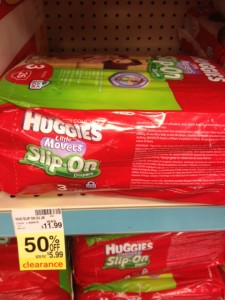 While I was out shopping last night, I found great baby clearance deals! Keep in mind that the deals will vary from store to store.
I’m not going to lie, my heart skipped a beat when I saw the Huggies Diapers on clearance and I knew I had a store and manufacturer coupon for them.
CVS
CVS has select diapers marked down 50%! The fun thing is that some of the included diapers were Huggies Little Movers Slip On Diapers, on clearance for $5.99.
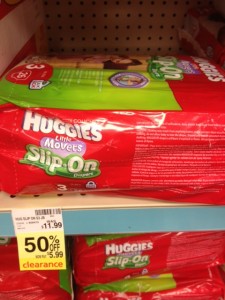
Huggies Little Movers Slip On Diapers, Jumbo Pack, $5.99 (reg. $11.99)
-$3 off Huggies Little Movers slip-on diapers (CVS coupon), printable
-$2.50 off Huggies Little Movers slip-on diapers printable
(use both, makes it 49¢ or 1¢ per diaper)
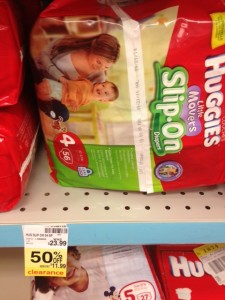
Huggies Little Movers Slip On Diapers, Big Pack, $11.99 (reg. $23.99)
-$3 off Huggies Little Movers slip-on diapers (CVS coupon), printable
-$2.50 off Huggies Little Movers slip-on diapers printable
(makes it $6.49 or 11¢ per diaper!)
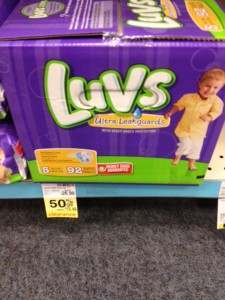
Luvs Ultra Leakguard Diapers, Super Pack, Size 5, 92 ct., $13.49 (reg. $26.99)
-$1 off Luvs Diapers printable
(makes it $12.49 or 13¢ per diaper!)

Pampers Easy Ups, Jumbo Pack, 26 ct., $6.69 (reg. $13.39)
-$1.50 off Pampers Easy Ups Trainers, excl trial size printable
(makes it $5.19 or 19¢ ea.!)
Remember, the deals may not be available at your CVS, but potentially getting diapers for 49¢ is worth looking. You could print the coupons and take them with you just in case.
Target
Target has a ton of baby clothes marked down 70%! If you buy Circo items, you can use the Cartwheel coupon to save an extra 15% on them. This is perfect for buying clothing for next summer.
They have many tops, skirts, and bodysuit marked down to $1.50 (reg. $5), so they are only $1.27 after the Carthweel! The Cartwheel will apply on up to 4 items.
-15% off Circo newborn apparel, size newborn – 9 mo, excl swimwear, shoes, accessories, outerwear and clearance, Target Cartwheel printable
-15% off Circo infant boys apparel, 12m-5t, excl sleepwear, outerwear, swimwear, accessories, shoes and clearance, Target Cartwheel printable

What is the best clearance deal you’ve found lately?
See more baby deals.

Here’s a list of deals for a $1 or less running at Bi-Lo this week. Look through the entire Bi-Lo Ad before you head to the store!
Bi-Lo Deals – $1 or Less
- Arnold or Oroweat Bread, 20 oz, at $1.99 (99¢)
-$1/2 Arnold sliced bread or sandwich thins rolls (regional), SS 6/16
(makes it 49¢) - Baby Cut Carrots, 1 lb bag, at $1.99 (99¢)
- Dannon Oikos Greek Yogurt Dip, 12 oz, $2
-$1 off Dannon Oikos Dips, 12 oz (regional), SS 8/18
(makes it $1) - Powerade, 32 oz, 69¢
- Campbell’s Chunky Soup, 15.25-19 oz, $1.50 Read More→