
This post may contain affiliate links. Read our disclosure here.
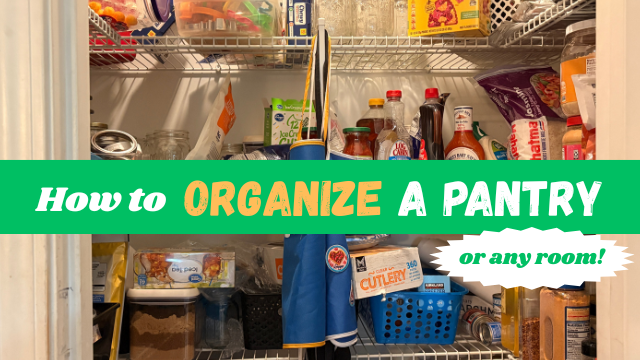
A friend who has been going through a hard season recently asked if I’d be willing to come clean out and organize her pantry. She knows this is something I love to do, so it didn’t even feel like a sacrifice. It took me less than 2 hours, which isn’t too bad. If she wasn’t already a generally organized person, it probably would have taken longer, but through the mess I could see the system she had before her life got turned upside down. While I was working on this project, I began thinking about how the principles I was using could apply to anyone, no matter the size of the pantry, and also that these principles could apply to any room of your house–bathroom cabinets, linen closets, bookshelves, garage shelves, etc. Here are my tips for how to organize a pantry!
How to Organize a Pantry (or Any Room!)
My friend told me that she was a little embarrassed to have me see your pantry, but after many years of helping friends organize spaces, I told her it was by no means the worst that I’ve seen!
Evaluate your space
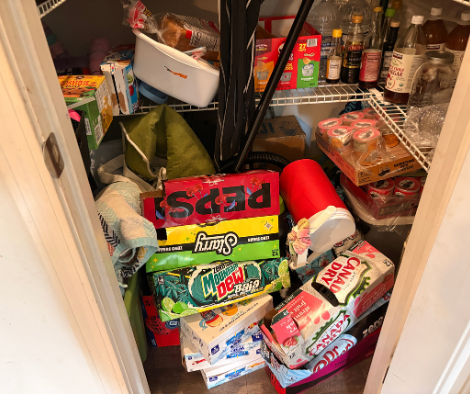
The first step is to take a deep breath and evaluate the space you’re trying to organize. Don’t let yourself get overwhelmed. Take a good look and imagine what you would like it to look like. Once you have a bit of a vision of what you’re wanting and what needs to be addressed, you can move on to the next step.
With my friend’s pantry, I immediately knew that one of our goals was going to be to get things off the floor. But the shelves were crowded, so that would mean having less stuff in the pantry overall. Often, the reason an area won’t stay organized is because there is just too much stuff in that space. I wasn’t sure what we could move out of the pantry, but that’s where I planned to start.
Get rid of anything that doesn’t belong
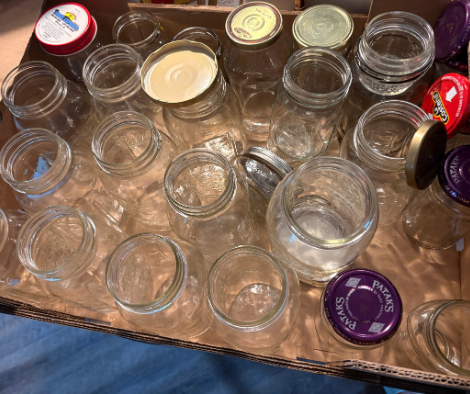
My friend’s husband is a prolific gardener and every summer she makes dozens of jars of refrigerator pickles. She will ask friends for old jars. This year her friends really went all the way and she ended up with probably 50 jars, but she didn’t use them all. These jars have been taking up valuable shelf space in her pantry. We got all the ones that didn’t have lids or that were not big enough for good use and put them in a box to donate.
Getting rid of things might mean truly throwing something away or donating it, or it might mean finding another space in your house for those items. One thing we left in the pantry was a big bin of beach towels. Living in the South, my friend said her kids are always coming in wet from the sprinkler or a friend’s pool or playing in the rain. The pantry is near the garage door, so having that bin of towels there makes it easy for her or her kids to grab one. There is no right or wrong way to organize a space; you do what works for you! We left the towels in the pantry.
This also includes getting rid of expired items. My friend was pretty on top of things, but I did find a bag of cornmeal that had expired in 2025.
Remove things from boxes/packaging to make more space
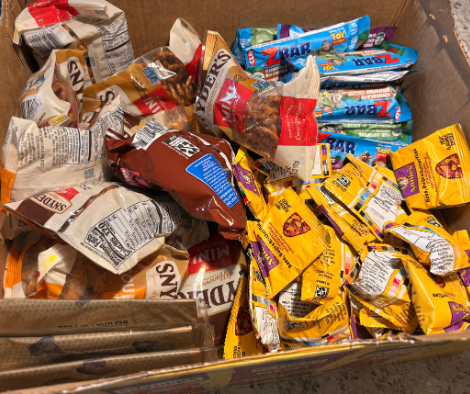
Another thing that takes up space is boxes. My friend often shops at Costco and gets large boxes of items for her kids’ lunches. Leaving everything in their individual boxes not only took up valuable space but also made it hard for her younger kids to get things. Putting all the snacky stuff in one box (which was just a large pretzel box with the flaps removed) let us recycle two big boxes and also made it easy to grab things for kid lunches.
Combine similar things
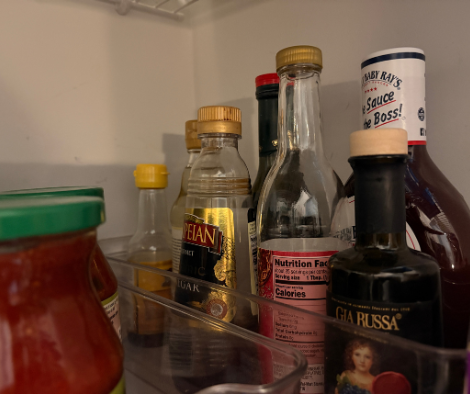
Like most of us, my friend sometimes buys things without checking to see if she already has it. I was able to combine bottles of vinegar and get rid of several empty bottles. We did the same thing with multiple packages of rice. Knowing how much you have of things keeps you from buying unnecessarily, but the only way to know how much you have is to make sure you can easily look!
Use clear containers
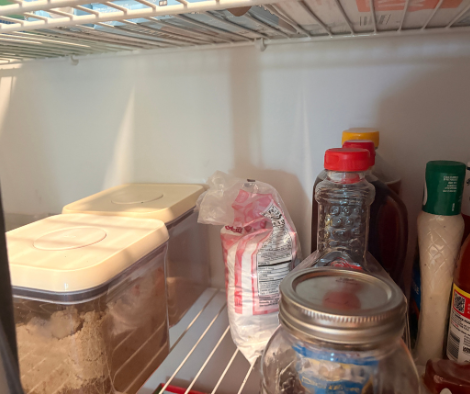
I don’t think we should all strive to have those Instagram-worthy pantries where literally everything is in a clear container. It looks nice, but it’s not very practical. I do like to have some things in clear containers, though, like my baking supplies and other grains. It makes it less messy when trying to scoop it out and I can easily see what I’m looking for. I also like clear bins for condiments and snacks, if possible, so we can see what we have!
Keep everything visible
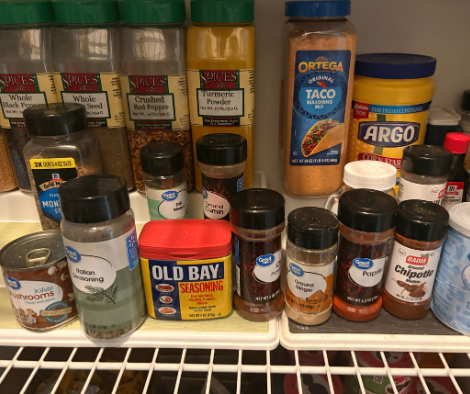
Spices are notorious for hiding and then leaving you with four bottles of cream of tartar when it comes time to make Snickerdoodles. I love these tiered organizers for spices or other small bottles. You can do the same thing with upside down cardboard boxes for larger items—no need to spend money on fancy organizers!
Keeping everything visible helps avoid the problem I mentioned of buying things you already have. It also just makes your cooking and baking less stressful when you’re not having to dig around for what you’re looking for.
Think about what you use often
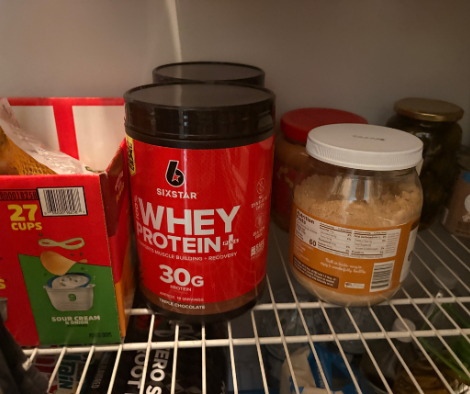
You know how in the grocery store, they put the name brand items at eye level so you’ll be more likely to buy them? You can use a similar principle in your pantry by putting the things you use frequently right at eye level. The less you’re touching the other stuff in your pantry, the more likely it is to stay organized. My friend makes a smoothie with protein power and peanut butter powder every morning, so we put those at adult level (her kids don’t need access) so she can easily grab it.
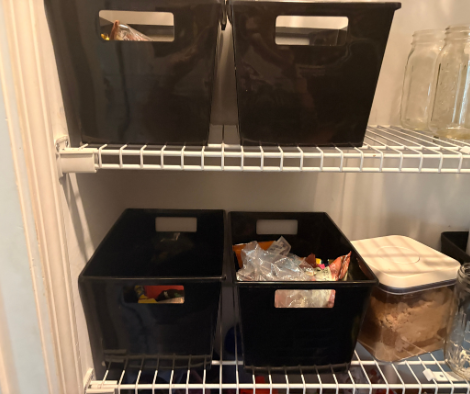
For the kids, though, we put the afternoon snack basket on the bottom shelf so they can get to it without her having to help.
Consider others who use the space
A pantry is often used by many members of the house, and if you want them to help you keep it organized, you might have to give them some guidelines. This friend has four kids, and each one has a bin in the pantry. This is where they can put “their” stuff. If they get a special snack at the store, or a goody bag from a friend’s party, they can put it in their bin and know that it’s set aside for them. And for mom, it’s also not cluttering up the rest of the shelves!
Consider future purchases
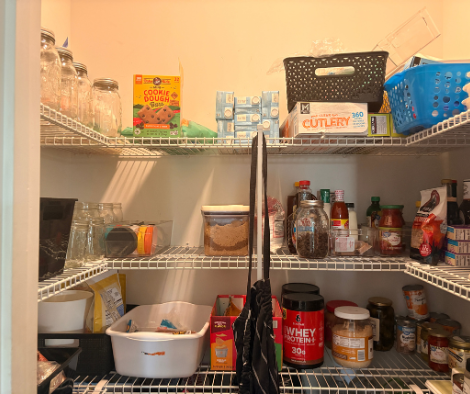
Here’s the finished picture of the upper shelves of the pantry. You can see that I put like with like, found space for the jars, and placed things they don’t use often (like disposable dinnerware) far up top. The great thing about this is that there is still a lot of room. You don’t want to organize something and use up every square inch of space, because you have to think about future purchases. You don’t want to buy more of what you have, but you might by something different that needs space.
Do you have any additional tips on how to organize a pantry? Let us know in the comments!